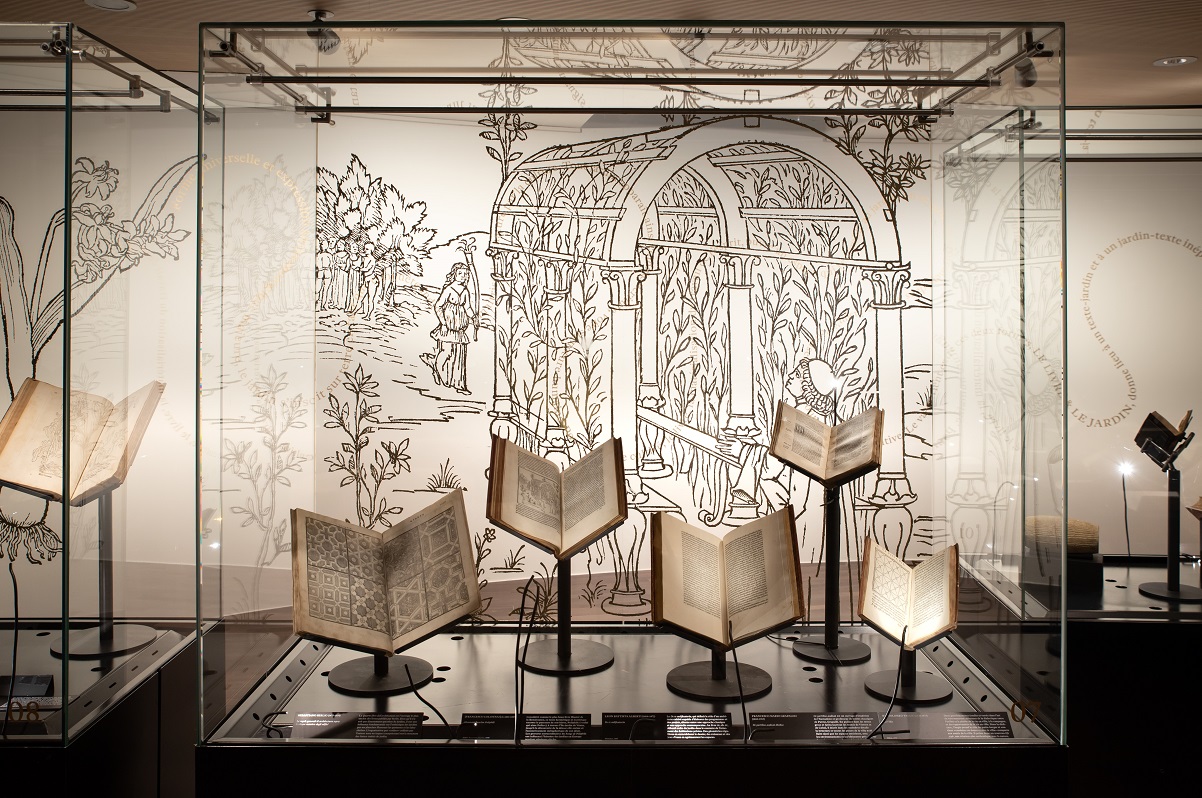
L’atelier a pour mission la préservation matérielle de la collection du musée. Technicienne de musée et conservatrices-restauratrices font face à des problématiques spécifiques aux différents supports de l’écrit (papyrus, parchemin, papier) sous leurs formes le plus diverses (rouleau, livre, leporello, dessin, gravure…) conservés dans nos collections.
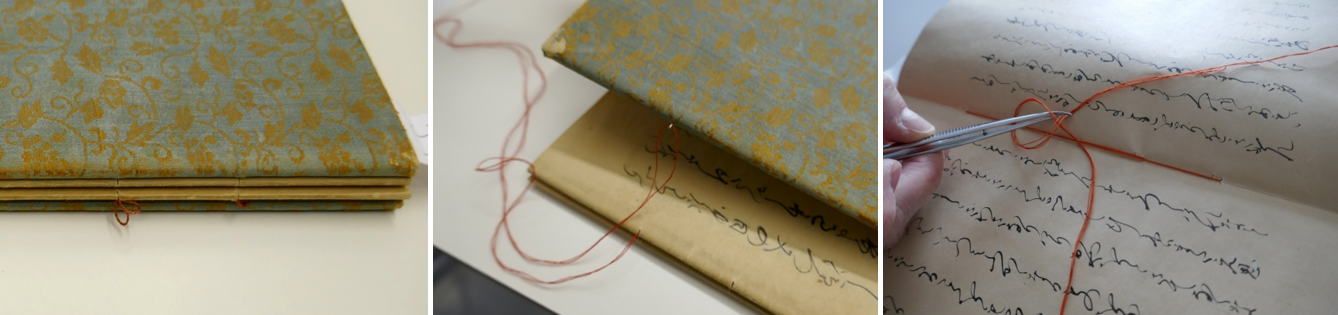
Projets récents
- La mission de conservation préventive sur le fonds Michel Butor possède sa page dédiée !
- Le dossier complet de restauration-conservation des CB 601 a et b est en ligne !
- L’ensemble du projet de restauration et numérisation du corpus arabo-persan est disponible ici !
- Vous pouvez suivre la restauration du Papyrus Bodmer 101 grâce à sa page dédiée !
Pôle de conservation préventive
Gabriella Zucchetti œuvre à la conservation préventive. Elle consiste en l’ensemble des mesures ayant pour objectif d’éviter et de minimiser les dégradations liées à l’environnement des collections. La conservation préventive porte sur des domaines variés tels que la gestion du climat des réserves et des salles d’exposition, la manipulation des œuvres, leur sécurité, leur transport, le contrôle de l’éclairage, la gestion des polluants et des risques biologiques des collections, ou encore l’établissement d’un plan de sauvetage en cas d’urgence.
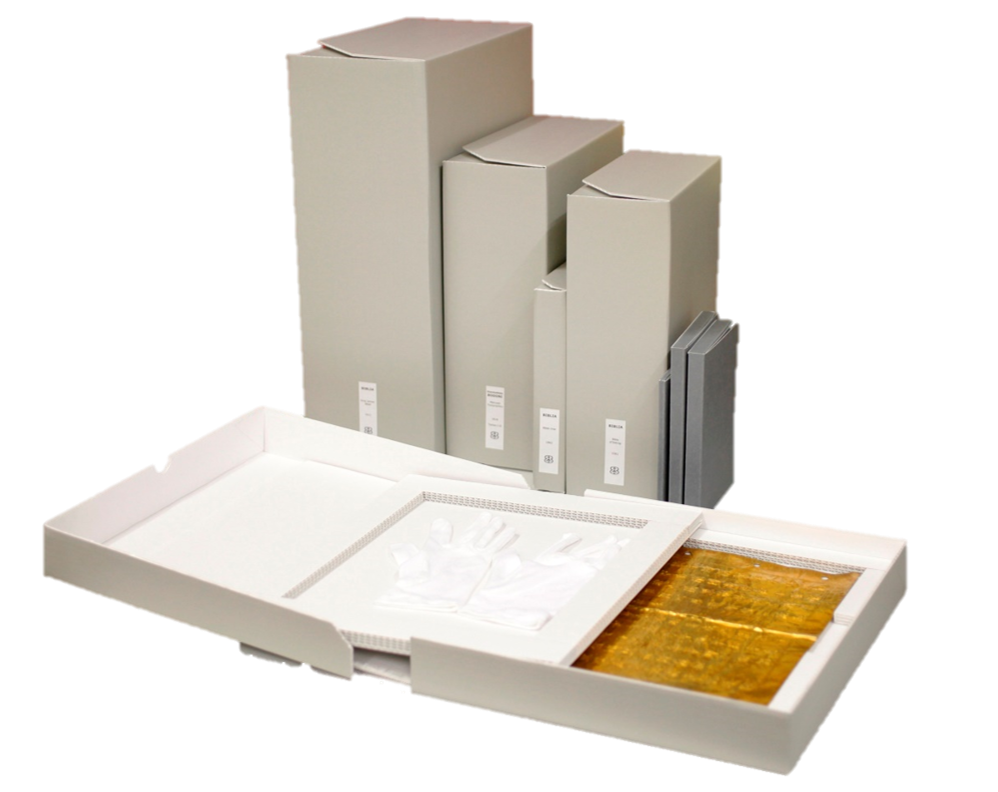
Des conditionnements sur-mesure sont réalisés afin de créer une enveloppe protectrice pour les objets les plus précieux.
Pôle de conservation-restauration
Sandra Vez est conservatrice-restauratrice d’arts graphiques et de livres. En parallèle du maintien de l’ensemble des mesures de conservation préventive, elles interviennent sur les objets pour des traitements spécifiques.
Une observation minutieuse, le constat de son état et un diagnostic de traitement sont apportés afin de déterminer une intervention adaptée à chaque ouvrage et dans le respect de son intégrité historique. Nous attachons une grande importance aux matériaux et aux techniques employés, privilégiant une intervention à la fois minimale et d’un haut degré de réversibilité. Des consolidations sont souvent nécessaires avant l’exposition des objets.
L’atelier réalise également les montages des ouvrages lors des expositions et prépare les objets pour les consultations et les prêts.
***